
Someone Somewhere Ecommerce: How They Sell to the U.S. from Mexico
Estimated reading time: 9 Min
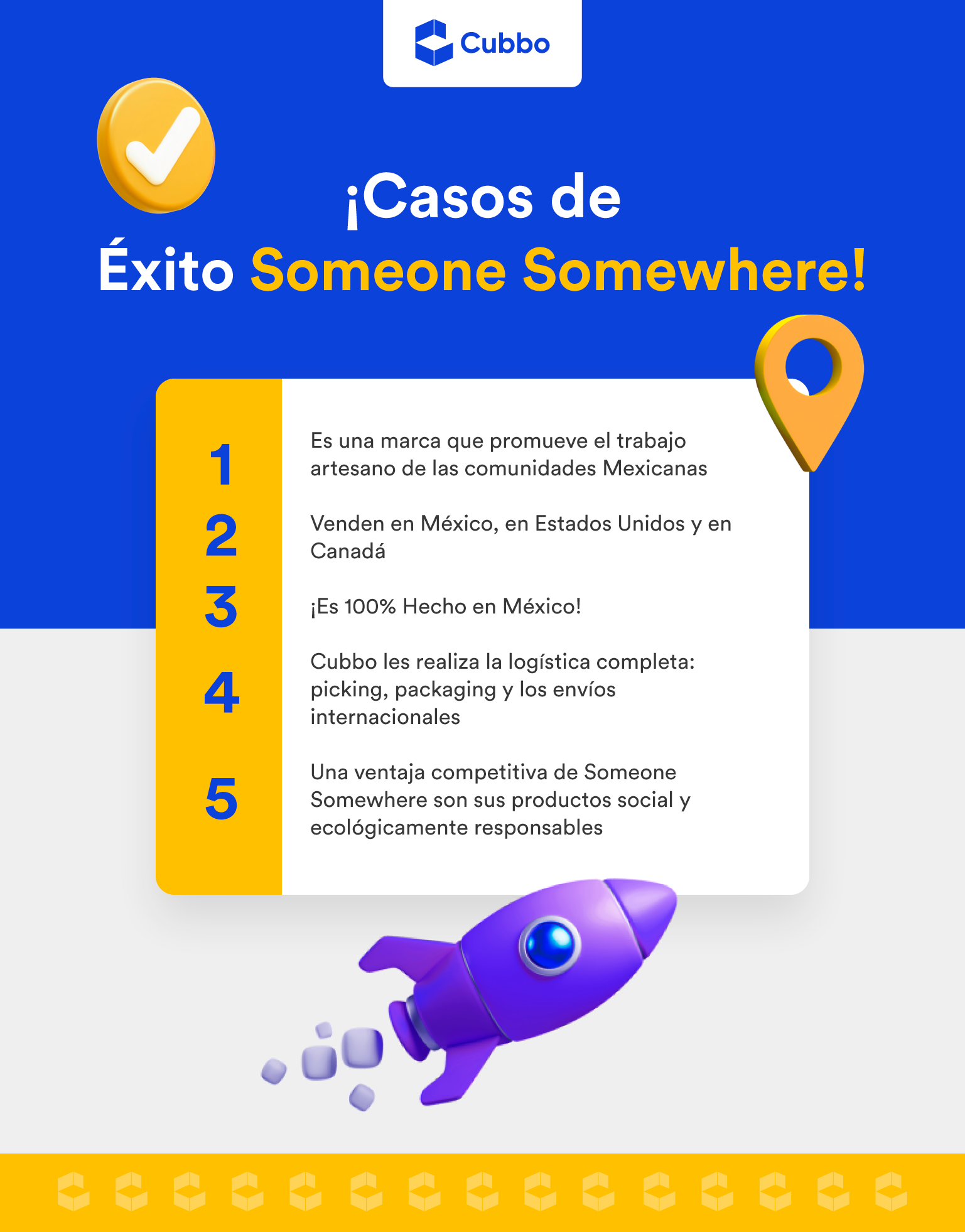
Someone Somewhere is one of those brands with soul. They don't just make impeccably high-quality products—behind them lies a social mission and a philosophy of life.
This brand is committed to promoting the ancestral talent of indigenous Mexican communities to create sustainable, durable fashion that is responsible toward the environment. It is fashion that does good for those who make it, those who wear it, and the planet. That is why it was an honor to speak with Alejandro Ramos, Supply Chain Manager at Someone Somewhere, to learn a bit about their story.
From a bazaar to globalization
Frank: Let's start at the beginning, Alejandro. Where did Someone Somewhere come from?
Alejandro: The Someone Somewhere brand is about five years old. The founders first called it Flor de Mayo, about 10 years ago.
Frank: And who are the founders?
Alejandro: Enrique Rodríguez, Fátima Álvarez, and Antonio Nuño. While still students at Tec, they started this project in their third semester, and the products were mostly shirts with hand-embroidered collars and cuffs.
Frank: And why the name change? Flor de Mayo sounds more artisan.
Alejandro: Yes. But precisely, after five years they decided to reach a bigger, more international market, and that's why they changed the name.
Frank: This name has a strong meaning that aligns with your brand identity and concept, right?
Alejandro: That's right. Someone is for the artisans who make our products, and Somewhere is for the place where they live and learned their craft—the people who work with us. Both matter to us. Our products are the work of hands that have lived a culture, a tradition, a history. That is why they are not industrially produced garments, but rather born from someone, from Someone, and from what that place and that culture represent—that Somewhere.

Frank: And were you always ecommerce, or did you start as a physical business?
Alejandro: Flor de Mayo was first a physical business run at university bazaars and small bazaars in Mexico City. And Someone Somewhere also started physically, with a first store in Mexico City—and now we have three. On the digital side, we launched ecommerce a year ago and began selling in the United States and Canada. The idea is to open markets in Latin America and Central America in the future, and then the rest of the world, with the advantages that ecommerce gives us.
A worldview and a business mission
One of the characteristics that best defines this brand is its powerful message. Someone Somewhere doesn't sell you a T-shirt—it sells you a story. And that story has to align with a way of seeing the world, or it wouldn't make sense.
Frank: Let's talk a bit about your mission. Because this isn't the typical fashion you find at big fashion brands, right?
Alejandro: No. And that shows in the mission of Someone Somewhere, which is to help artisans generate greater opportunities—not only economically through work, but by building a value chain that guarantees steady work year-round so they can keep growing with us and have more opportunities.
Social awareness, from Mexico to the world
"The mission of Someone Somewhere is to help these vulnerable communities that are part of an incredible world of unique crafts in Mexico, and to bring that talent to the rest of the world."

Frank: Do you think that with tools like ecommerce, these artisans have been able to reach places that would have been impossible before?
Alejandro: Yes, absolutely. Without ecommerce, much of the work from those communities—their artisan craft, to be precise—could not reach the United States, Canada, or any country in the world.
Frank: And how do you ensure those products are high quality? Because going global is tough—it means exposing yourself to the eyes of the world
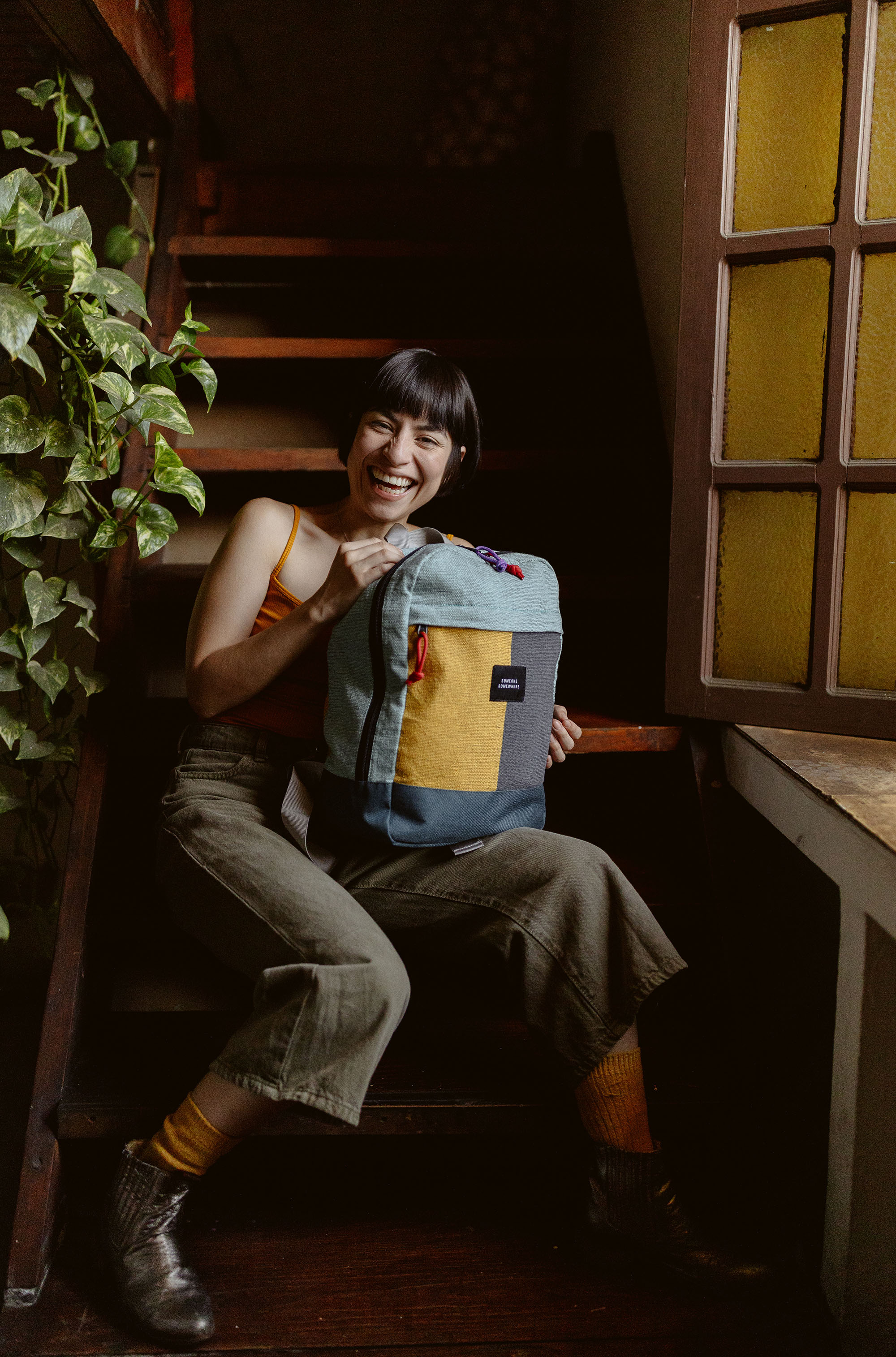
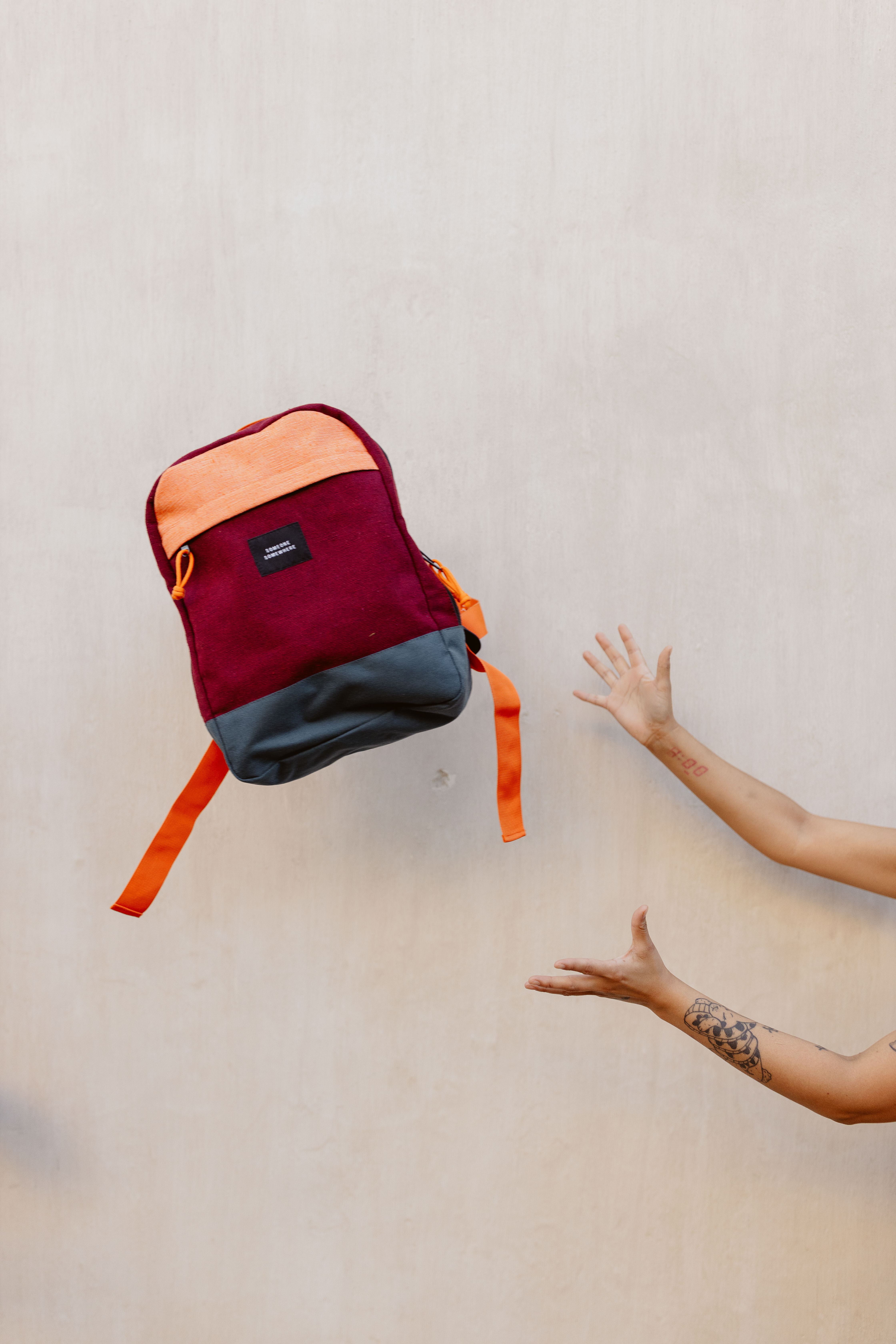
Alejandro: Well, one part we have at Someone Somewhere is the brand's virtuous triangle: with every product we seek to combine design, impact, and functionality. By functionality we mean that our products can help people in their day-to-day lives. That they are useful. For example, in the case of backpacks, that they have the right number of compartments for the people who want to use them, and that the garments are as durable as possible to avoid waste issues that ultimately become pollution problems. We seek to avoid fast fashion.
Frank: A full commitment to a responsible lifestyle at every level. Is that also the kind of target audience you look for among your buyers?
Alejandro: Our target is global youth markets who can enjoy these garments and also value them for everything they are: at the level of craftsmanship and at the level of the statement of principles and values they represent—garments that do good for the artisan because they provide a livelihood, good for the user because they are high quality, and good for the environment because they are nature-respectful products made to last. They are not disposable fashion.
Also read: Platanomelón and Cubbo, opening the market for sex toys in Mexico
Preserving ancestral technique
"We want to bring the world the crafts made in Mexico with our indigenous communities. We want these ancestral techniques not to be lost. And we want to take them everywhere."
Our target is young people aged 25 to 40 who care about travel, nature, and making conscious purchases. That is our ideal customer.
Conquering the world with Cubbo!
For Someone Somewhere, being able to step away from logistics was key. A brand with so much potential and such a strong experiential component needs to focus on what is truly profitable for it: mastering the buyer experience.
That is why the partnership with Cubbo was a perfect fit for Someone Somewhere.
Frank: Where do you currently sell?
Alejandro: Today we have a presence in Mexico, the United States, and Canada. We have had some B2B sales in Europe—few, but we have already started approaching that part of the world.
Frank: I imagine choosing the United States and Canada has been comfortable for you with USMCA.
Alejandro: Well, look—the USMCA and ecommerce help us tremendously because they reduce taxes, and they are only paid starting at $800. And in ecommerce, most purchases don't reach that amount—we wish they did—but they stay below it. In Canada the threshold is lower, and we have had cases of customers who had to pay. But few.
Frank: And logistics in the United States—how do you manage it? I think that's partly why you're with Cubbo, right?
Alejandro: That's right. When we launched the brand in the United States we worked with a fulfillment center there, and although operationally things went well, the cost was extremely high because warehouse rent is much more expensive in the United States, and transportation is also more costly. And if you add that our products have a high volumetric weight—backpacks, for example—that made the operation even more expensive.
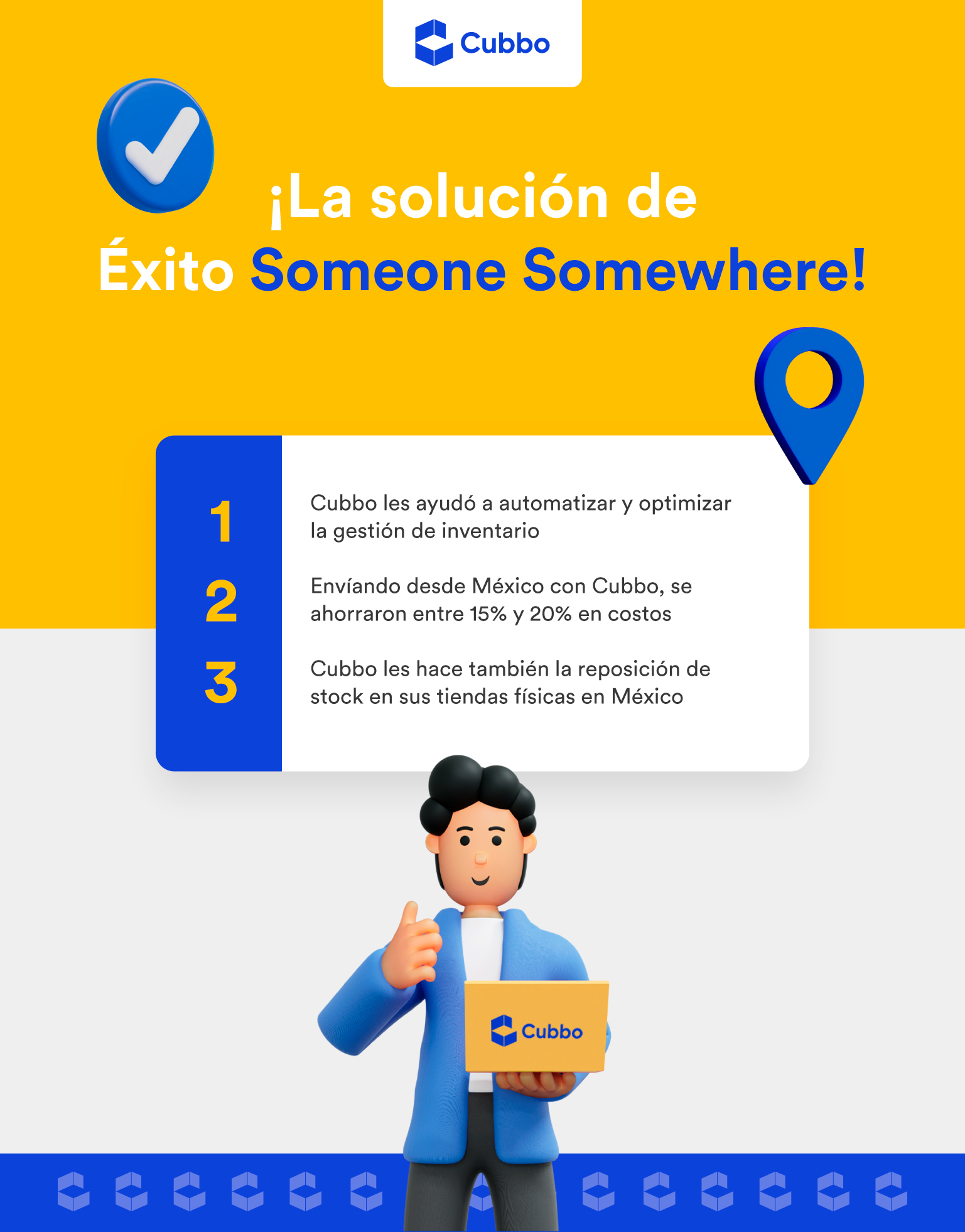
That's where Cubbo gave us the international shipping solution, and that allowed two very important improvements for the brand. First, being able to consolidate inventory. Before we had two inventories—one for the United States and one for Mexico. So on the supply side, being able to consolidate was an improvement because inventory control used to be complicated.
Now we have all our inventory consolidated with Cubbo, and that gives us better planning.
And the second improvement was that, although it may seem hard to believe, it was much cheaper for us to ship products from Mexico than to keep them in the United States.
That reduced costs by at least 15% to 20%. It's strange, but that's what happens. It's more economical to ship from Mexico to the United States than from within the United States itself.
Frank: And how did you find Cubbo?
Alejandro: We discovered Cubbo in a very curious way. We were just making the plan to switch logistics providers, because before we worked with another that was more specialized in large pallet and box replenishments and not so much in ecommerce to customers—which is piece-by-piece—and we didn't have the technology with that provider to implement everything with our Shopify store, which is where we run our ecommerce.
I found them thanks to my girlfriend, who received a Cubbo order from another brand that also works with them, and that's how I discovered them. I noticed they answered everything, they served the customer, and they made tracking shipments very easy—and because of that experience we looked them up and I got in touch with Josu.
After two conversations we realized they had a lot of experience and that they had already approached the brand before—and so everything came together.
Also read: PANAM, quality and 100% Mexican logistics
Frank: On the logistics side, what are the plans for the future?
Alejandro: Going forward, our goal in logistics and sales channels is to open our ecommerce to the whole world. Next year we want to open South America and Central America.
Frank: Have you already chosen the countries?
Alejandro: We're still deciding, but we understand that a market very similar to Mexico is Colombia, and then we would go for Argentina, Chile, and Brazil—because they are the biggest markets with the most ecommerce potential.
And the truth is that with the international shipping capabilities Cubbo offers, this has opened many doors for us to start thinking about global growth.
The idea we have today is to run the entire operation from Mexico and make all shipments from here with Cubbo. That way we keep our inventory consolidated.
Frank: So I understand you do all your fulfillment with Cubbo, correct?
Alejandro: Correct. Cubbo took on our complete fulfillment. We have outsourced everything to them. And that has helped us a lot, because we don't have the muscle to do that ourselves today. And it has helped us improve internal processes because with Cubbo we have been able to set up many Shopify automations, which is the platform we use.
I didn't know much about fulfillment centers before, but now I understand that the biggest differences with Cubbo are that they are highly specialized in ecommerce and piece-by-piece fulfillment. We work almost entirely in ecommerce, so it's ideal—but in addition, we also asked Cubbo to handle replenishment for our physical stores, and we were able to do it. So it has been excellent and we have adapted very well.
Frank: At the brand level, what has been the biggest challenge you've faced?
Alejandro: The biggest challenge has been finding product-market fit, and we're still working on that: developing products that fit into what we call the virtuous triangle. And now, expanding into new markets.
Frank: Alejandro, would you give some advice to an entrepreneur reading us who wants to start selling artisan products in Latin America?
Alejandro: One piece of advice I would give… The main thing is to have a good sales platform. That is ultimately the first thing the customer sees. Maybe you don't need to have the best product in the world, but a product that fits what you're looking for and is supported by an excellent sales platform.
And by that I mean both customer service and logistics operations. Because in the world of ecommerce, those are the only real physical touchpoints between the brand and the customer.
Looking for a partner to boost your delivery process, fulfillment, and customer satisfaction? Don't hesitate to contact us—we're the best fulfillment center for ecommerce in Mexico and Colombia. Just click here.
Preguntas Frecuentes (FAQs)
Someone Somewhere helps indigenous Mexican artisans generate greater opportunities by building a value chain that guarantees steady work year-round. The brand promotes ancestral craftsmanship through sustainable, durable fashion that benefits artisans, customers, and the environment.
Someone Somewhere uses Cubbo's international shipping solution to fulfill orders from consolidated inventory in Mexico to customers in the United States and Canada. Shipping from Mexico proved 15–20% cheaper than operating a U.S. fulfillment center, even for products with high volumetric weight like backpacks.
Although a U.S. fulfillment center worked operationally, warehouse rent and transportation costs were extremely high—especially for bulky products. Cubbo allowed Someone Somewhere to consolidate inventory in one place, improve planning, reduce costs, and integrate seamlessly with their Shopify store.
With every product, Someone Somewhere seeks to combine design, impact, and functionality. Functionality means products are useful in daily life and durable enough to avoid waste. The brand deliberately avoids fast fashion in favor of long-lasting, environmentally responsible garments.
Alejandro Ramos found Cubbo when his girlfriend received an order from another brand that used Cubbo. Impressed by their customer service and easy shipment tracking, he contacted Josu at Cubbo while planning to switch from a logistics provider specialized in bulk replenishment rather than piece-by-piece ecommerce.
Someone Somewhere currently sells in Mexico, the United States, and Canada, with some B2B sales in Europe. Next year they plan to open ecommerce in South America and Central America, starting with Colombia, then Argentina, Chile, and Brazil—all operated from Mexico with Cubbo.
Alejandro Ramos recommends investing in a strong sales platform—the first thing customers see. Customer service and logistics are the only real physical touchpoints in ecommerce, so a product that fits the market and is backed by excellent operations matters as much as the product itself.