

4 Challenges for Ecommerce Adoption in LATAM
Estimated reading time: 10 min
When you think about selling a product online, the first thing you probably consider is having enough inventory to meet customer demand—and that's a good start! You can't offer an out-of-stock product and hurt your brand's reputation, but… Beyond that, you need to consider other factors that will be decisive if you want to drive business growth and meet the high demand and immediacy required in ecommerce, where you'll face increasingly demanding customers and environmental conditions that are affecting sector penetration, not only in Mexico but across all of LATAM.
Let's take action
There are certain factors that impact online consumer behavior and purchase decisions—important challenges to overcome in order to keep growing.
Have you ever asked yourself: What is that characteristic online stores must guarantee their customers to build trust and increase sales? After thinking about it for a few seconds, you'll agree that creating a satisfying experience throughout every stage of the purchase and product delivery process is, without a doubt, one of the greatest attributes for achieving this goal. Below, we've identified the following as the 4 main challenges for reaching this objective—keep reading and assess how your online store measures up on each point.
Challenge 1. Lack of Trust
In all human relationships, both personal and commercial, trust is a fundamental factor that determines decision-making; for online purchases, it plays an essential role—so much so that after price, the attribute that determines a consumer's purchase decision is trust in a website, one that has earned their loyalty and preference thanks to a satisfying service experience.
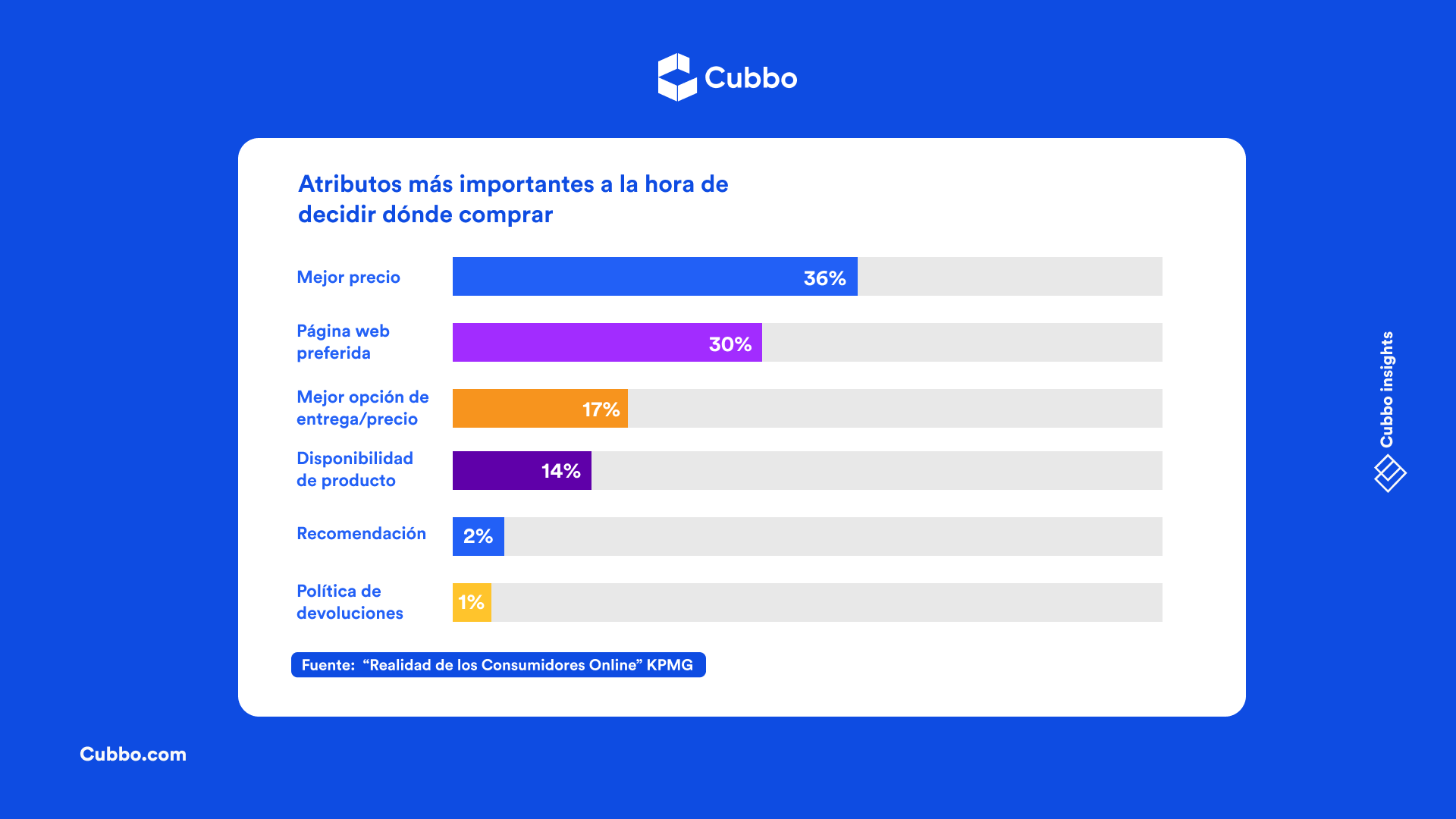
Considering that ecommerce is a technological product where there is no in-person encounter in which the user can physically meet the seller, feel the product, and take it home immediately, trust is the most powerful tool for driving online sales and overcoming certain fears that may be embedded in our culture or stem from that lack of face-to-face contact—one of them, and perhaps the strongest, is fear of fraud, a situation that often stays in the consumer's mind and prevents them from buying for fear of losing their money or sharing personal data and becoming a victim of scams or other crimes.
According to studies by Riskified and Visa conducted in Mexico and Brazil, 83% of Mexicans and 73% of Brazilians are concerned about identity theft (compared to an average of 51% in the U.S. and 55% in Canada); 78% of Mexicans and 77% of Brazilians are second most concerned about fraud through unauthorized cards (compared to 50% of Americans and 48% of Canadians); while 77% of Mexicans and 73% of Brazilians fear credit card fraud (a figure that reaches 39% in the U.S. and 48% in Canada).
As we can see, fear of fraud among Mexicans compared to other regions is greater in different aspects; in addition, there are other reasons that, according to AMVO, affect online purchase decisions in the country:

Is your online store a trustworthy place for buyers? Start by asking yourself: if you were the consumer of your ecommerce products, what would you want to see? What would give you security and confidence? Would you find the necessary features on the site or the guidance to complete the process from start to finish, even if you don't know how? Would you find alternatives for your specific type of user? Or, on the contrary, what would make you abandon the purchase? In most cases, "putting yourself in the customer's shoes" is a powerful tool for creating extraordinary experiences.
According to the report "The Reality of Online Consumers" by consulting firm KPMG, the following are the main characteristics shared by companies that inspire the most trust in the ecommerce sector—take note!:

In addition to the above, keep in mind the following tips that will help you increase customer trust and sell more:
*Humanize your brand. Something that characterizes online purchases is that users perceive the brand as distant—and in many cases, robotic—which prevents the closeness that conveys trust; to prevent this in your ecommerce, a good tool is establishing direct contact between the customer and the sales team through a sales chat, where the buyer receives, through real-time responses, the guidance and support needed to complete the purchase. This channel is so important that 1 in 3 online buyers say they turn to chat before placing an order to determine whether the ecommerce is trustworthy or not (according to HubSpot data).
In this case, chatbots are useful for speeding up the support process through automated responses; however, don't establish response cycles that are too long and based solely on general aspects—each user has a specific situation and at some point will feel the need to speak with an advisor; not finding this option easily will make them abandon the purchase and look for another provider.
In addition to the above, focus on strengthening your customer service after the product has been purchased—for a customer, receiving good after-sales service is highly valuable, one where they don't just receive a message with their order status but can easily access an advisor and get a timely response. Remember: service is one of the best attributes for building loyalty.
*Publish positive testimonials from your customers about their experience on your online store. Digital channels can be true influencers for attracting new customers; online opinions affect brand reputation and trust building.
*Ensure your website has a security certificate. These types of validations give users certainty that they are dealing with a verified brand, that their data and personal information will be sent to a legally established company, and that it won't be used for criminal purposes.
What happens if your customer writes to chat today? What if they make a purchase? What security are you giving them to share their data, and what are they looking for when they do? How often do they want to receive information from your brand? Focus on getting to know the customer, building a relationship of trust, and nurturing it over time. The cycle is simple: more than selling products, sell experiences—these translate into trust; once you have it, it will lead to new sales and favorable referrals for your company.
Challenge 2. Low Banking Penetration
According to World Bank studies, approximately 1.6 billion adults globally are currently unbanked, meaning they don't have access to banking or financial institution services—which for ecommerce becomes a major challenge, since payment gateways used to collect purchase payments, which facilitate and secure the process, mainly handle banking products that enable digital transactions, leaving a vast percentage of the population outside the option of buying online. The following chart shows the % of banking penetration in some countries in the region:


The above figures reveal quite noticeable growth gaps—we see that among Latin American countries with the lowest banking penetration is Mexico, which is also among the nations worldwide with the largest unbanked population, along with Egypt, Morocco, Vietnam, and the Philippines (as shown by research firm Merchant Machine studies), confirming the major banking growth challenge this economy faces.
In the case of nations like Colombia or Chile, the percentage of banking penetration among the adult population is notably higher; a relevant factor that contributed to their growth in recent months was COVID-19, since due to lockdowns and the economic difficulties this phenomenon generated, different governments delivered monetary aid to vulnerable populations, which led millions of people to access a banking product as a requirement to receive this benefit. In the Colombian case, for example, more than 2 million accounts were opened for this purpose.
It is expected that after the pandemic, online payments will continue gaining strength across all socioeconomic levels, where cash still has great relevance; according to Kantar consulting studies, cash payment accounts for 95% in lower-income segments and 65% among the population with higher incomes in Latin America.

Various factors affect banking penetration in Latin America—the challenge for ecommerce businesses is to face this reality and devise strategies that allow different populations to access their products through different payment methods.
In LATAM we have different alternatives, including:
- In-store payment (self-service or convenience): with a reference or code issued from the ecommerce payment gateway, it is possible to pay for the product at physical branches enabled for this purpose, such as Oxxo, Efecty, or Baloto; in this case, the challenge for ecommerce entrepreneurs is to ensure payments are completed, since up to 80% of purchases made under this model are not finalized.
- Cash on delivery (COD): although this option poses a significant logistical challenge, it is a good alternative for unbanked people who want to avoid travel. The challenge in this scenario is avoiding a higher number of returns due to failed payment, since in many cases the person receiving the order may not be home at the time of delivery, which can double logistical costs.
- Fintech ecosystem: one of the industries that has identified this gap in LATAM is Fintech, which has bet on the region and has seen steady growth in recent years—14% in 2020 alone (394 vs. 441)—where their specialization breaks down as: 20% payment services, 12% financial technology institutions, and 12% lending, according to Deloitte's 'fintech' sector information.
While financial inclusion accelerated worldwide over the past year, there is still a long way to go—ecommerce businesses must adapt to this scenario and to methods for attracting different types of buyers, always offering a safe, varied shopping experience with guarantees. If your end user has a payment alternative suited to their needs, they will surely end up buying on your ecommerce.
Challenge 3. Logistics Infrastructure
The growth of ecommerce in Latin America has posed challenges in multiple scenarios, including logistics, where service providers must be up to the task for this purchasing model, integrating and coordinating all processes associated with the supply chain and achieving higher levels of customer satisfaction thanks to a great service experience.
Among the characteristics buyers attribute to considering a delivery process efficient, we can find the following:

It is at this point especially where several countries in the region have gaps in their public postal services, unlike the U.S. and the United States Postal Service (USPS), which has a great service that meets ecommerce expectations: speed, cost, traceability, coverage, and quality—all with government subsidy. A major problem and disadvantage for LATAM! Where we don't have this type of organization.
In last-mile delivery, delivery quality is decisive; if a customer doesn't receive their product on time or in excellent condition, if they don't have shipment tracking or are dissatisfied with the delivery process, they will hardly buy from the same ecommerce again; automatically, their perception of the brand they purchased from will shift from positive to negative—here lies the great importance of having an incredible courier service that not only guarantees service but competitive costs (as in the U.S.).
In response to this scenario, many last-mile startups have emerged in the region seeking to fill this need.
Security, another aspect we can't forget
In addition to the lack of optimal postal services, security is another major challenge for last-mile logistics and ecommerce delivery fulfillment; in countries like the U.S., it is possible to deliver orders simply by leaving them at the front door of the indicated address without needing someone to receive them, since merchandise loss and theft don't occur—avoiding returns and other associated costs. What would happen if deliveries were made this way in LATAM? You surely wouldn't tell the delivery person to leave the order at your door to pick up when you return from work—you probably wouldn't find it, right? This scenario creates greater delivery inconveniences, requiring coordination with buyer schedules and confirming they are available to receive their order—which also increases service costs when this handoff isn't achieved. Seeking to solve this problem, some alternatives have emerged such as parcel delivery lockers—initiatives that are being optimized and in which we still have room to grow.
Technology, an ally for logistics infrastructure
Without a doubt, its integration into the logistics industry has generated multiple benefits that directly impact company productivity—its relevance is such that any ecommerce business that wants to drive medium- and long-term growth must include it in its processes, which has become a challenge for different brands, where factors such as resistance to change, fear of the new, or increased operating costs affect the transformation of logistics processes.
If your goal is growth, you must apply a strategy that adapts to current demands of the ecommerce sector, considering outsourcing services with logistics partners that supply the technology to digitize the process, make it simpler, identify supply chain weaknesses, and generate the necessary changes to obtain a greater return on investment while building buyer loyalty. Companies that invest in their logistics are more competitive, have better customer service levels, and are more profitable—technology is an ally in this field, enabling reduced preparation and delivery times, measurement of productivity and satisfaction indicators, among others.
There are various benefits that technology generates in the logistics field—more and more Mexican companies are aware of this reality and are implementing technologies in areas such as data analysis or warehouse automation, seeking greater efficiency in inventory management and delivery fulfillment at the lowest possible cost.
Challenge 4. Lack of Legislation
The lack of legislation that provides coverage for the sector on issues such as online transactions or the returns and exchange process has been, without a doubt, a major challenge in different countries in the region, many of which don't have this type of regulation—in Mexico, for example, behaviors such as online fraud are not considered a crime, nor is there an established returns and exchange policy—two criteria that, from the buyer's perspective, affect ecommerce penetration due to the lack of guarantees for both parties.
If we analyze the situation in other territories such as Colombia, electronic fraud is part of the computer crimes or cybercrime that are penalized in the country, for which there is a regulatory framework seeking to eradicate this type of behavior. In the case of returns and exchanges, all ecommerce businesses operating in the country must establish a policy covering this aspect—by law, they are required to receive or exchange the product when the customer is not satisfied with it, whether because they didn't like it or wish to cancel the purchase; in this case, a period of up to 8 days is stipulated for the customer to request an exchange or return, guaranteeing the product is in perfect condition; in situations like this, it is the user who bears the logistical costs generated for the return, not the ecommerce.
Fraud, returns, and exchanges in figures
Analyzing some regional figures on fraud, we find that for the Mexican case, 40% of online transactions performed are a potential fraud. On the other hand, regarding reverse logistics, we see that the return rate varies across different countries—in Mexico, for example, it stands at 2%; moving to more established regions like Germany, this behavior occurs in 41% of purchases; in the Netherlands it happens in 36%, while in the United Kingdom the return percentage is 32%—quite high averages compared to other territories like Spain, where it reaches 18%, or Italy, where the return figure is 13% of purchases.

What did you think of these 4 challenges currently facing the ecommerce sector? Did you relate any of them to your online store or identify others? Every company is a "world" we can learn from—leave us your comments.
Looking for a partner to help you improve your delivery process, boost your fulfillment rate, and customer satisfaction? Don't hesitate to contact us—we are the best fulfillment center for ecommerce in Mexico and Colombia, just click here.
Information sources:
Study "The Reality of Online Consumers" by KPMG Spain / AMVO_Estudio_de_Venta_Online_2021_VersiónAfiliados-1/ Chilean Banks and Financial Institutions Association (Abif) / Market research multinational Ipsos / Banking and Financial Entities Association (Asobancaria) / AMVO Online Sales Logistics KPI Study 2020 / The Supply Chain as a Driver of Competitiveness, EGADE Business School at Tecnológico de Monterrey / Mastercard data.
Digitalbankla Larepublica Forbes Apnews Beetrack Mexicoxport Metricsmexico Beetrack Americaretail Americami Bamericas Repository Beetrack Riskified Hubspot Deloitte Interior.gob Europapress Uaem Adyen Forbes Asuntos Legales Welivesecurity Al norte de Castilla America retail Marketing directo Marketing4ecommerce Mecalux